Who Was George P Wilbur?
George P Wilbur was an American stuntman, stunt coordinator, and actor whose imposing physical presence made him one of the most recognizable performers to portray Michael Myers in the Halloween horror franchise. Born on March 6, 1941, and passing away on February 1, 2023, he spent decades working behind the scenes of Hollywood, helping create the dangerous action sequences that made countless films memorable.
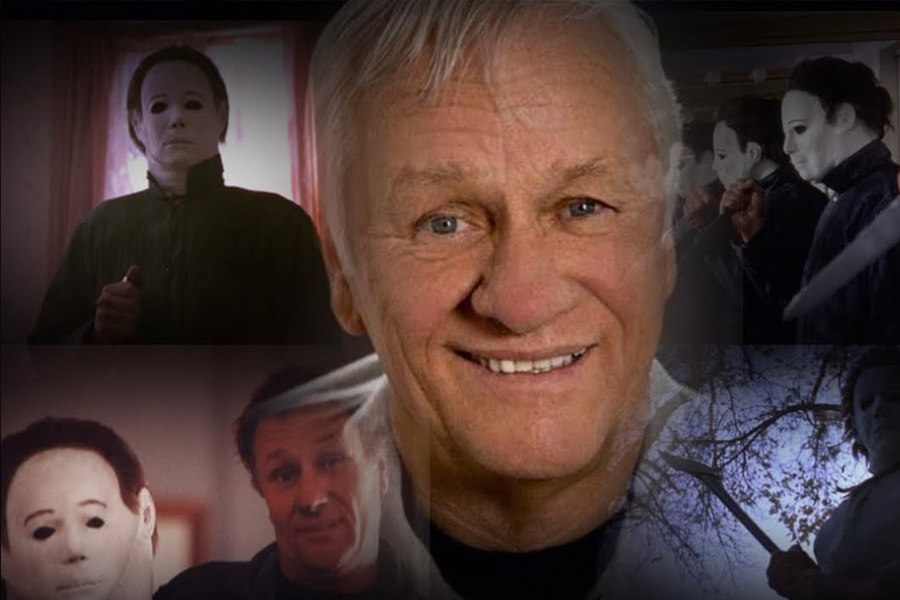
Wilbur became especially famous for playing the masked killer in Halloween 4 The Return of Michael Myers (1988) and Halloween The Curse of Michael Myers (1995). Standing approximately 6 feet 2.5 inches tall and possessing a powerful build, he brought an intimidating stillness to the character. His slow, deliberate movements helped transform Michael Myers into a towering figure of cinematic terror.
Yet the man behind the mask was far removed from the frightening character audiences saw on screen. Directors and colleagues remembered Wilbur as a gentle, considerate professional who treated fellow performers with kindness. His life combined physical courage, personal faith, family devotion, and an enduring commitment to his craft.
Wilbur’s career stretched across approximately six decades, from his early work in Westerns to major action films, horror classics, and television productions. His induction into the Hollywood Stuntmen’s Hall of Fame recognized a career built on skill, discipline, and a willingness to undertake physically demanding work.
George P Wilbur’s Biography and Early Life
George Peter Wilbur was born March 6, 1941, in Kent, Connecticut. His parents were Melvin Wilbur and Mary M. Cusack. His start was humble, but he worked on some of Hollywood’s biggest films.
Wilbur was a Navy veteran before entering showbiz. He learned discipline in the military, but his career took shape afterward.
His next job was horse wrangling at a dude ranch outside Tucson. This employment put him in the right position at the right moment. John Wayne’s 1966 Western El Dorado was filmed nearby. Wilbur visited the shoot, worked as an extra, and performed as Wayne.
That event opened a previously unplanned avenue. His experience in films and stunts came from working with a Hollywood star. He was influenced by John Wayne to enter the industry.
In California, Wilbur trained at Paul Stader’s stunt school. He gradually learned falls, battles, risky actions, and physically difficult sequences. His early steady employment included double for Peter Graves in Mission: Impossible.
He shows how an unexpected opportunity may lead to a lifetime career. Visiting a Western film set led to Hollywood fame.
George P Wilbur’s Career as a Stuntman and Actor
Wilbur’s reputation grew through the 1970s and 1980s as he worked on productions that demanded precision, athleticism, and considerable physical courage.
He performed stunt work in a broad range of genres, including science fiction, action, drama, comedy, and horror. His credits included Planet of the Apes, Escape from New York, Ghostbusters, Ghostbusters II, Poltergeist, Die Hard, The Silence of the Lambs, Total Recall, and Star Trek II The Wrath of Khan.
He also worked on Casino, The Perfect Storm, and Spider-Man (2002). His television work included productions such as Magnum, P.I., Dynasty, and Days of Our Lives.
Among the performers he doubled for were Peter Graves, Joe Don Baker, Jack Palance, Craig T. Nelson, and James Garner. Doubling for established actors required more than matching their height or build. Wilbur had to reproduce their movements convincingly while managing the physical risks of each sequence.
His work extended beyond performing stunts. He served as a stunt coordinator on films including Murphy’s Romance (1985), Poltergeist II The Other Side (1986), and Me and the Kid (1993). In that role, he helped organize action sequences, coordinate performers, and ensure that dangerous scenes could be executed as safely and effectively as possible.
Wilbur also appeared on screen as an actor. His credits included Every Which Way But Loose, Firestarter, and The Running Man, in which he played Lieutenant Saunders.
The variety of his work reflects the breadth of his professional abilities. He could disappear into a background action sequence, double for a leading actor, coordinate a complex stunt, or step into a recognizable character role.
George P Wilbur as Michael Myers in the Halloween Franchise
A defining role in horror cinema


For many horror fans, Wilbur’s name will always be associated with Michael Myers, the silent killer whose blank mask and relentless pursuit became hallmarks of the Halloween franchise.
Wilbur portrayed Michael Myers in Halloween 4 The Return of Michael Myers, released in 1988. He was brought into the production after an earlier performer, Tom Morga, had initially been involved. Wilbur’s height, bulk, and ability to move with controlled menace made him a natural fit.
His performance depended on restraint. Michael Myers rarely needed dialogue or dramatic facial expressions. Instead, Wilbur used posture, timing, and a steady, lumbering walk to create tension. Every movement suggested that the character was patient, powerful, and almost impossible to escape.
Wilbur returned to the role in Halloween The Curse of Michael Myers in 1995. Although Don Shanks played Michael Myers in Halloween 5, Wilbur also contributed stunt work to that film.
He performed his own stunts as Michael Myers in Halloween 4, including demanding work during the climactic truck sequence. Hanging onto a moving vehicle and being thrown from it required careful coordination and physical endurance.
His portrayal also earned recognition beyond the films themselves. Wilbur became the first performer to play Michael Myers to appear on the cover of Fangoria magazine. Over time, horror enthusiasts came to associate his distinctive gait and physical presence with a particular era of the franchise.
Despite the frightening image he projected, Wilbur was reportedly considerate toward young actress Danielle Harris, who played Jamie Lloyd in Halloween 4. Director Dwight H. Little later recalled Wilbur as a gentle giant who understood the importance of making the child performer comfortable.
Wilbur would remove his mask before filming and after a scene, allowing Harris to see his face and recognize that the frightening figure was simply an actor. He offered reassurance and hugs rather than allowing the character’s intimidating appearance to overwhelm her.
That small gesture reveals something important about his professionalism. He understood that a convincing performance required an illusion, but maintaining that illusion never mattered more than treating a colleague with kindness.
Dangerous Stunts and a Life Changing Injury
Stunt work often places performers in situations that look effortless on screen but demand extraordinary preparation. Wilbur experienced the dangers firsthand.
During the production of Lepke (1975), he suffered a serious head injury while performing a stunt. He later described being struck on the head, resulting in a concussion. A separate account of the incident described a fractured skull and a blood clot on the brain.
The experience reportedly became a turning point in his personal life. Wilbur described a renewed Christian faith after the accident and recalled that his first words upon regaining consciousness were, “Thank you, Jesus.”
He subsequently explained that his priorities had changed. Faith came first, followed by family and then work. The experience appears to have reinforced the importance of looking beyond professional achievement and recognizing the people and beliefs that gave his life meaning.
Around that period, he also gave boxing lessons to children. This detail adds another dimension to his personality. The physical skills that made him effective in Hollywood could also be used to teach discipline and confidence to younger people.
Wilbur continued working despite the risks. He later recalled performing a difficult high fall down a confined elevator shaft in Defenseless, during which he struck a camera on the final take.
These stories illustrate the unpredictable nature of stunt performance. A successful scene might last only seconds on screen, but the preparation, danger, and consequences could remain with a performer for years.
George P Wilbur’s Wife Norma Gaynell Wilbur
Wilbur’s wife, Norma Gaynell Siefker Wilbur, known as Gaynell, supported his long career. Born 1936, died August 2013.
Norma was a foreign service and embassy secretary before her marriage. Her career was very different from her husband’s entertainment career because she traveled much.
After marrying George, she left that career to work in real estate. She had a successful real estate career in San Fernando Valley, California.
Her career shows that George’s Hollywood work did not define the Wilburs. Norma supported their family while maintaining her career.
Retirement brought her to Sun City, Palm Desert, California. Bridge, parties, and travel were her hobbies. Her interests showed a life of camaraderie and engagement after work.
Norma died of cancer at home in August 2013 surrounded by relatives. Pierce Bros. Valley Oaks Memorial Park held services.
Her obituary called her daughters her true loves. That description reveals her most important family bonds.
George lost his wife over ten years before dying. Their marriage is private, but their family life shaped his story.
George P Wilbur’s Children and Family Relationships
George and Norma Wilbur had two daughters, Gena Anne Wilbur and Leigh Wilbur. While George became known to audiences around the world, his daughters followed different paths and maintained varying levels of public visibility.
Gena Anne Wilbur
Gena Anne Wilbur was born on December 10, 1975, in Los Angeles County, California. She followed a path into the film industry, developing a career as a producer and executive producer.
Her credits include The Aggression Scale (2012), Cheap Thrills (2013), Starry Eyes (2014), and the short film All in All (2011).
These projects demonstrate that Gena built her own professional identity within the entertainment business. Unlike her father, whose work frequently took place in front of cameras or amid dangerous action sequences, her responsibilities involved helping bring productions together behind the scenes.
There is an interesting parallel between their careers. George contributed physical performance, practical expertise, and stunt coordination to filmmaking. Gena’s work in production involved a different set of responsibilities, but both careers depended on the collaborative nature of the industry.
Gena married film producer Travis Stevens on October 15, 2011. Some records indicate that the marriage later ended, although details of their private relationship are limited.
She has also been associated with real estate licensing records in California. Beyond these professional and biographical details, she has generally maintained a lower profile than many people connected to famous Hollywood families.
Gena survived her father, George P. Wilbur, who died in February 2023.
Leigh Wilbur
Leigh Wilbur is George and Norma’s other daughter. She was born around 1973 or 1974, although a definitive public birth date is not widely documented.
Compared with Gena, Leigh has maintained a particularly private life. Publicly available information offers few details about her education, occupation, relationships, or personal interests.
Her inclusion in Norma’s obituary confirms her place in the immediate family. The description of both daughters as central figures in their mother’s life suggests the importance of their family bond.
Leigh’s limited public profile is a reminder that being related to a recognizable Hollywood figure does not necessarily mean choosing public attention. Some family members prefer a life away from entertainment headlines, and there is little reason to assume that their privacy indicates anything beyond personal preference.
Did George P Wilbur Have Grandchildren?
Some secondary filmography and biographical listings refer to a grandson named George Wilbur, reportedly associated with Halls Harbour, Nova Scotia, Canada. However, this relationship is not consistently established in prominent family obituaries or widely available biographical accounts.
It is therefore difficult to provide a reliable account of George P. Wilbur’s grandchildren. His two daughters are better documented, while information about later generations remains limited.
Similarly, little widely circulated information identifies his siblings or other extended relatives. The most clearly established family picture centers on George, his wife Norma, and their daughters Gena and Leigh.
George P Wilbur’s Net Worth and Financial Status
George P. Wilbur’s net worth was never reliably established in widely available public information. Although online estimates sometimes assign specific dollar amounts to entertainment figures, there is insufficient verified information to state how much wealth he accumulated.
His long career nevertheless suggests decades of professional employment across film and television. He worked on major studio productions, doubled for well-known actors, coordinated stunts, and took occasional acting roles.
Stunt professionals can earn income through daily or weekly production contracts, stunt coordination fees, and repeat employment. Their earnings vary according to experience, production budgets, union arrangements, the nature of the work, and the number of projects secured.
Wilbur’s extensive credits and Hall of Fame recognition indicate professional longevity and industry respect. They do not, however, establish a particular net worth.
No dependable public accounting of his estate, assets, investments, or inheritance arrangements is available. His family’s financial circumstances should therefore not be inferred from speculative online estimates.
George P Wilbur’s Final Years and Death
Wilbur cut less on film employment and spent more time with family as he aged. He attended horror conferences where fans could meet actors from films that molded their childhoods and interests.
His convention appearances preserved his legacy. Wilbur’s physical portrayal of Michael Myers made longstanding admirers want to see him.
He died at 81 on February 1, 2023. After his death, stuntmen, directors, actresses, and horror fans paid tribute.
Chris Durand, who played Michael Myers in Halloween H20, called Wilbur a class act and beloved. Screenwriter Daniel Farrands called him nice and a treasured Halloween family member.
These accolades highlighted Wilbur’s real-life contrast with his cinematic persona. Colleagues appreciated his friendliness, professionalism, and compassion despite years of playing a terrifying horror character.
His cultural influence went beyond Halloween movies. Tom Tucker is alleged to have used “George P. Wilbur” as an early stage name in a 2012 Family Guy episode, backed by vintage video of Wilbur as Michael Myers.
His Halloween 4 and Halloween The Curse of Michael Myers performances were praised on social media after his passing. Fans also remembered his interactions with cast members and courtesy to fans.
Celebrity did not define his career. Instead, it required real expertise, physical devotion, and the ability to persuade an audience.
Extended Timeline of George P Wilbur’s Life
| Year | Milestone |
|---|---|
| 1941 | Born on March 6 in Kent, Connecticut. |
| Early 1960s | Served in the U.S. Navy before working as a horse wrangler in Arizona. |
| 1966 | Worked as an extra and stand-in for John Wayne on El Dorado. |
| Late 1960s | Moved to California, trained at Paul Stader’s stunt school, and began building a professional stunt career. |
| 1975 | Worked on Lepke and experienced a serious head injury during a stunt. |
| Late 1970s | Continued working in film while reflecting on faith and family following his injury. |
| 1985 | Worked as stunt coordinator on Murphy’s Romance. |
| 1986 | Coordinated stunts on Poltergeist II The Other Side. |
| 1988 | Played Michael Myers in Halloween 4 The Return of Michael Myers. |
| 1989 | Contributed stunt work to Halloween 5. |
| 1993 | Served as stunt coordinator on Me and the Kid. |
| 1995 | Returned as Michael Myers in Halloween The Curse of Michael Myers. |
| 2002 | Added Spider-Man to his extensive stunt credits. |
| 2012 | Received renewed pop culture recognition through a Family Guy reference to his name. |
| 2013 | His wife, Norma Gaynell Wilbur, died of cancer. |
| 2023 | Died on February 1 at age 81, prompting tributes from the stunt and horror communities. |
Frequently Asked Questions About George P Wilbur
How old was George P Wilbur when he died?
George P. Wilbur was 81 years old when he died on February 1, 2023. He was born on March 6, 1941, in Kent, Connecticut.
What was George P Wilbur famous for?
He was best known for portraying Michael Myers in Halloween 4 The Return of Michael Myers (1988) and Halloween The Curse of Michael Myers (1995). He also built a lengthy career as a stuntman, stunt coordinator, and actor.
Who was George P Wilbur’s wife?
His wife was Norma Gaynell Siefker Wilbur, who worked in the U.S. foreign service before becoming a successful real estate agent in California. She died of cancer in August 2013.
How many children did George P Wilbur have?
George and Norma Wilbur had two daughters, Gena Anne Wilbur and Leigh Wilbur. Gena pursued a career in film production, while Leigh has maintained a relatively private life.
What movies did George P Wilbur work on?
His credits included Halloween 4, Halloween The Curse of Michael Myers, Escape from New York, Ghostbusters, Die Hard, Poltergeist, The Silence of the Lambs, Casino, Total Recall, Spider-Man, and The Perfect Storm, among many others.
Did George P Wilbur perform his own stunts as Michael Myers?
Yes. Wilbur performed his own stunts as Michael Myers in Halloween 4, including physically demanding work during the climactic truck sequence. His experience as a professional stuntman helped make the character’s movements convincing.
What happened to George P Wilbur during the filming of Lepke?
Wilbur suffered a serious head injury while performing a stunt on Lepke in 1975. He later described the incident as a concussion, while another account described a fractured skull and a blood clot on the brain. The experience reportedly strengthened his Christian faith and changed how he prioritized his life.
What was George P Wilbur’s net worth?
His net worth has not been reliably disclosed. Although he worked for decades on major film and television productions, no verified public financial statement establishes his total wealth.
Was George P Wilbur involved in the Hollywood Stuntmen’s Hall of Fame?
Yes. Wilbur was inducted into the Hollywood Stuntmen’s Hall of Fame in recognition of his contributions to stunt performance and the film industry.
What made George P Wilbur’s portrayal of Michael Myers distinctive?
His height, muscular build, controlled movements, and deliberate walk gave Michael Myers a formidable physical presence. His performance relied on silence and precise body language rather than dialogue, helping make the character frightening even when he stood motionless.
What is George P Wilbur’s legacy?
Wilbur’s legacy rests on his extensive stunt career, his work in major Hollywood productions, and his memorable interpretation of Michael Myers. His colleagues also remembered him for his kindness, professionalism, and care for younger performers. His career demonstrates that a lasting contribution to cinema can come not only from the stars in the spotlight but also from the skilled people who make the impossible appear real.