Basic Information
Kevin Rooney, a retired American boxer and acclaimed trainer, helped Mike Tyson become one of the most explosive heavyweight champions in history. Rooney, born in Staten Island, New York, on May 4, 1956, became identified with Cus D’Amato’s peek a boo boxing style, which stressed defensive movement, fast combinations, and unrelenting pressure.
His partnership with Tyson went beyond training and fighting. Rooney developed Tyson and became his trainer after D’Amato died in November 1985. Tyson went on an incredible winning streak, won heavyweight titles, and became a global sports star under Rooney.
Rooney’s tale goes beyond professional success. His life also includes family separation, financial problems, alcoholism, legal issues, recovery, and major health issues. His bond with his son, Kevin Rooney Jr., provides another crucial perspective on the boxing legend.
| Category | Details |
|---|---|
| Full name | Kevin Rooney |
| Date of birth | May 4, 1956 |
| Birthplace | Staten Island, New York, United States |
| Nationality | American |
| Profession | Retired professional boxer and boxing trainer |
| Boxing mentor | Cus D’Amato |
| Most famous fighter | Mike Tyson |
| Other notable fighter | Vinny Pazienza |
| Former spouse | Bonnie Rooney |
| Children | Kevin Rooney Jr. and Amber Rooney |
| Notable achievement | Training Tyson during his undefeated early professional championship run |
| Hall of Fame recognition | Staten Island Sports Hall of Fame, Class of 2024 |
Early Life and Introduction to Boxing
Kevin Rooney grew up on Staten Island, where his early home life was reportedly difficult. Boxing provided structure, discipline, and a place to channel emotions that might otherwise have developed into destructive habits.
He trained at the Police Athletic League’s 120th Precinct gym, an environment that introduced him to the fundamentals of competitive boxing. For Rooney, the gym became more than a place to develop physical strength. It offered routine, purpose, and a sense of belonging.
His amateur career reached an important milestone in 1975, when he won the New York Golden Gloves championship in the 147 pound sub novice division. He defeated Kevin Higgins of West Point in the final, establishing himself as a promising young fighter.
Rooney turned professional in 1979. He competed primarily as a welterweight and junior middleweight, facing opponents whose experience and skill tested his abilities. Although he never became a world champion, his professional career gave him practical knowledge of the sport’s physical and psychological demands.
Kevin Rooney’s Professional Boxing Career
Rooney’s professional record is generally reported as 21 wins, four losses, and one draw, although knockout totals vary between accounts. His opponents included accomplished fighters who later became better known for their championship achievements.
In 1981, Rooney suffered a seventh round technical knockout loss to Davey Moore, a future junior middleweight world champion. Rooney had entered that contest undefeated at 15 wins, making the defeat a significant turning point in his career.
In 1982, he faced Alexis Argüello, the celebrated three division world champion. Argüello stopped Rooney in the second round during his debut at 140 pounds. Fighting an opponent of Argüello’s caliber illustrated the difficult road facing a professional boxer without the advantages enjoyed by elite champions.
Rooney retired from professional competition around 1985. His future, however, would become far more influential through his work outside the ring. The experience he gained as a fighter helped him understand the balance between offense, defense, conditioning, and composure that he would later teach to younger boxers.
How Kevin Rooney Helped Develop Mike Tyson
Rooney’s most famous professional relationship began through Cus D’Amato, the influential trainer who recognized Tyson’s potential while the future champion was still a teenager.
After Teddy Atlas left Tyson’s training camp, D’Amato assigned Rooney to work with the young boxer in late 1982. Tyson was approximately 16 years old, powerful and aggressive, but still developing the technical skills needed to succeed at the highest level.
Rooney helped refine Tyson’s movement, defensive reactions, combination punching, and ability to attack from close range. The peek a boo style, associated with D’Amato, required fighters to maintain a compact guard while moving their heads, changing angles, and exploding into combinations.
Rather than relying solely on Tyson’s natural punching power, Rooney worked to make him a more complete fighter. The approach transformed Tyson into a compact, fast moving heavyweight who could close distance before opponents had time to establish their own rhythm.
When D’Amato died in November 1985, Rooney became Tyson’s principal trainer. He inherited the responsibility of continuing a system built around technical precision, discipline, and trust.
Between turning professional in 1985 and his eventual separation from Rooney in 1988, Tyson won his first 35 professional fights, scoring 31 knockouts during that stretch. He captured major heavyweight titles and unified the championship landscape, culminating in his first round knockout of Michael Spinks in June 1988.
Many boxing historians and observers consider this period the defining technical phase of Tyson’s career. His head movement, balance, speed, and combination punching made him exceptionally difficult to control.
The 1988 Separation and Its Impact on Tyson
The partnership between Rooney and Tyson ended in late 1988, after Tyson dismissed Rooney and members of his original team. Promoter Don King was an influential figure in the changing structure of Tyson’s professional circle.
The separation became one of boxing’s most debated turning points. Rooney believed that the training relationship and the original team’s influence were essential to Tyson’s development. Other observers argued that Tyson’s later career reflected the consequences of losing the technical guidance and personal stability that had shaped his early success.
Tyson’s first professional defeat came in February 1990, when Buster Douglas knocked him out in Tokyo. The result intensified retrospective debates about the changes that followed Rooney’s departure.
I find the distinction between Tyson’s physical gifts and his technical development particularly important when considering Rooney’s legacy. A fighter can possess extraordinary power, but consistent performance also depends on timing, defensive habits, preparation, and decision making. Rooney helped bring those elements together during Tyson’s rise.
Kevin Rooney’s Relationship With His Family
Rooney’s family life was considerably less public than his boxing career, but it forms an important part of his personal history.
He was married to Bonnie Rooney. Their marriage eventually broke down, with alcoholism and other personal difficulties contributing to the separation. Their son was reportedly around two years old when his parents separated or divorced.
Rooney has at least two children, Kevin Rooney Jr. and Amber Rooney. Both have appeared in accounts of his personal struggles and recovery, particularly during periods when his drinking threatened his stability.
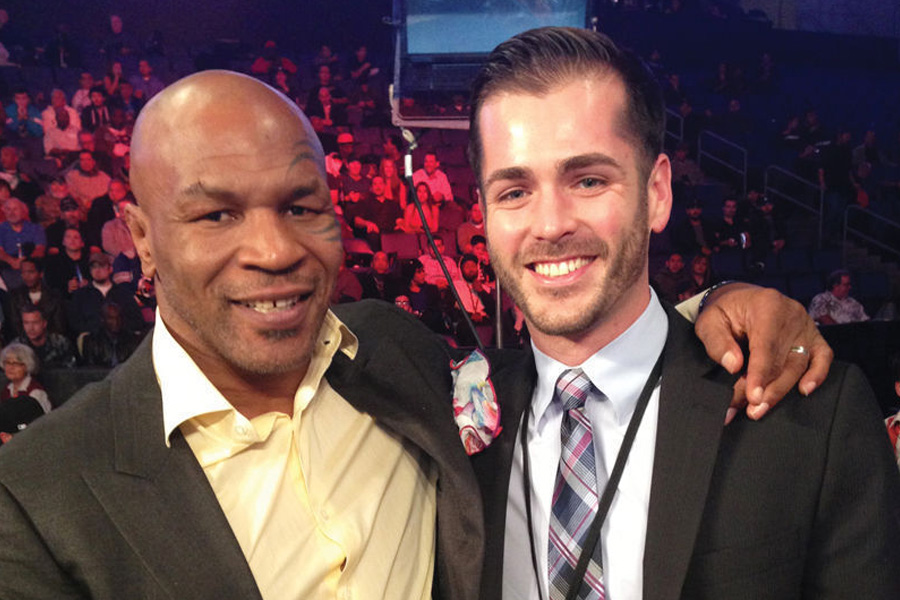
Kevin Rooney Jr.
Kevin Rooney Jr., also known as KC or Kevin C. Rooney, followed his father into boxing, although he eventually developed a career in the business side of the sport as well.
Born around 1984 or 1985, he spent much of his childhood living with his mother in Hudson, New York, following his parents’ separation. His relationship with his father developed again later, allowing the two to reconnect through their shared interest in boxing.
Kevin Jr. trained under his father and competed as an amateur, including an appearance in the quarterfinals of the New York Golden Gloves. Around 2011, he turned professional as a junior middleweight or welterweight. His own professional record was relatively short, but his involvement in the sport continued beyond his time as a fighter.
He subsequently worked in boxing promotions and public relations. His professional experience included Star Boxing under Joe DeGuardia, work with Lou DiBella, and later roles at Matchroom Boxing under Eddie Hearn.
In more recent years, he has been associated with responsibilities such as event management and fighter development. His career demonstrates how a family connection to boxing can evolve from direct competition into the organizational work that sustains the sport.
Kevin Jr. has also spoken about his father’s struggles and recovery. Their renewed relationship is especially meaningful in light of the years of separation and the difficulties that affected Rooney’s personal life.
Amber Rooney
Amber Rooney is Kevin Rooney’s daughter and has largely remained outside the public spotlight.
Family accounts have referenced Amber alongside her brother in connection with their father’s struggles with alcoholism. She reportedly encouraged him to seek help, illustrating the role family members played in his eventual recovery.
Unlike Kevin Jr., Amber has not developed a widely documented public career in boxing. Information about her personal life, education, and professional activities remains limited.
Her place in Rooney’s story is primarily familial. The available accounts suggest that his children were important sources of motivation as he worked to rebuild his life.
Bonnie Rooney
Bonnie Rooney, Kevin’s former wife, was part of his life during the years when his boxing career and training work were developing. Their marriage eventually ended amid personal difficulties, including his struggles with alcohol.
Public information about Bonnie’s life is limited, and much of what is known about their relationship comes from accounts focused on Rooney’s legal problems and recovery.
Their separation also shaped Kevin Jr.’s childhood, as he reportedly lived primarily with his mother after the marriage ended. This family history helps explain why the later reconciliation between father and son became such a significant part of Rooney’s personal story.
Alcoholism, Legal Troubles, and Financial Collapse
After leaving Tyson’s camp, Rooney struggled with alcoholism, arrests, and money.
Driving under the influence, resisting arrest, and an assault on his ex-wife’s home in 1987 were his legal issues. These examples showed how personal issues eclipsed his professional success.
Despite his wealth from Tyson’s championship years, Rooney’s finances deteriorated. Various reports indicate he earned $2.5 million in 1988.
Rooney declared bankruptcy in 1990 with debts of $1.4 million. Financial mismanagement, gambling losses, casino debts, and taxes caused the collapse.
The difference was remarkable. Rooney guided one of the world’s most successful boxers, but his fortunes suffered. His experience shows that high incomes do not guaranty financial security.
The Lawsuit Against Mike Tyson and the Settlement
After Tyson dismissed him, Rooney pursued legal action over an alleged oral agreement connected to his work as Tyson’s trainer. The dispute centered on claims that he had been promised an ongoing training relationship or compensation linked to Tyson’s career.
In 1996, a jury awarded Rooney approximately $4.4 million. Following appeals and further legal proceedings, the dispute was settled in 1998 for a reported amount of about $8.1 million.
The settlement became a major financial development in Rooney’s life, although the money did not erase the effects of his earlier bankruptcy and debts. Portions of the recovery were reportedly directed toward creditors.
The case also highlighted an important issue in professional sports: the vulnerability of verbal agreements when a trainer’s financial future depends on a fighter’s continued success. Rooney’s relationship with Tyson had been built on years of shared work, but the eventual breakdown led to a lengthy legal battle.
Kevin Rooney’s Work With Vinny Pazienza
Rooney demonstrated that his abilities as a trainer extended beyond Tyson. One of his most notable later partnerships was with Vinny Pazienza, widely known as Vinny Paz.
Pazienza suffered a devastating automobile accident in 1991 that left him with a broken neck. His recovery required extraordinary determination, and his return to competitive boxing became one of the sport’s remarkable comeback stories.
Rooney helped guide Pazienza through his return to the ring. Pazienza eventually won a super middleweight world title after recovering from the injury, demonstrating that disciplined coaching could help a fighter rebuild both confidence and performance.
Rooney also worked with fighters such as Jeremy Williams and was associated with Hasim Rahman during an earlier phase of Rahman’s development. He continued training promising boxers in Catskill, New York, maintaining the tradition established by D’Amato.
His work with local fighters was not always motivated by money. Accounts of the gym describe a trainer who remained committed to developing young athletes, sometimes offering instruction at little or no cost. That dedication became a quieter but meaningful part of his legacy.
Kevin Rooney’s Health and Later Years
In later years, Rooney faced serious health challenges. Reports during the 2010s and into 2024 described him as living with dementia and residing in a nursing home or specialized care facility.
Some accounts have linked his condition to the cumulative effects of a career spent in boxing, although the precise medical causes and extent of any connection have not been publicly established in detail.
His reported condition has prompted renewed discussion about the long term consequences of repeated head trauma in boxing. The sport’s history includes numerous athletes who experienced neurological problems after years of competition, making Rooney’s situation especially poignant given his lifelong involvement in the ring.
Kevin Jr. has remained connected to the boxing community and has discussed his father’s condition. Public information about Rooney’s day to day life is limited, and his own recent social media activity appears minimal.
The reports about his health have also revived interest in his contribution to Tyson’s early career. For many fans, Rooney represents an era when a trainer’s influence extended beyond technical instruction to include discipline, trust, and a fighter’s personal development.
Kevin Rooney in Films and Boxing History
Rooney’s life and work have appeared in dramatic portrayals of boxing history.
Clark Gregg portrayed him in the 1995 television film Tyson, which explored Mike Tyson’s life and career. Aaron Eckhart later portrayed Rooney in the 2016 film Bleed for This, which told the story of Vinny Pazienza’s comeback after his serious neck injury.
These portrayals introduced Rooney to audiences who might otherwise have known him only as the trainer standing beside Tyson during championship fights.
He also received recognition for his contributions to boxing, including induction into the Staten Island Sports Hall of Fame as part of its Class of 2024. The honor acknowledged his connection to his hometown and his influence on the sport.
Mike Tyson and Kevin Rooney’s Enduring Legacy
Rooney’s influence on Tyson’s technique is often mentioned in discussions of his best years. Fans see Tyson slip blows, move his head, change angles, and strike quickly in training.
The primary question is whether Tyson’s career would have changed if Rooney had supported him. Technical discipline may have declined after the separation, according to some. Others note Tyson’s personal, management, and professional developments.
X is often discussed in historical blogs, especially when 1986–1988 footage circulates. The idea that Tyson was a different boxer under Rooney is commonly acknowledged, although hypothetical matchups against other champions are debatable.
Rooney’s legacy beyond one bout. His work with Tyson showed how a skilled trainer could enhance innate talent. His Pazienza efforts demonstrated he could lead a different recovery. He maintained his gym commitment in Catskill as a place of discipline and opportunity.
Extended Timeline of Kevin Rooney’s Life
| Year | Event |
|---|---|
| 1956 | Born on May 4 in Staten Island, New York. |
| 1975 | Wins the New York Golden Gloves championship in the 147 pound sub novice division. |
| 1979 | Begins his professional boxing career. |
| 1981 | Loses to future champion Davey Moore by seventh round technical knockout. |
| 1982 | Faces Alexis Argüello and begins working with the young Mike Tyson under Cus D’Amato. |
| 1985 | Retires from professional fighting around this period. D’Amato dies in November, and Rooney becomes Tyson’s principal trainer. |
| 1986 to 1988 | Guides Tyson through his rapid rise to heavyweight supremacy and an undefeated 35 fight professional stretch. |
| June 1988 | Tyson knocks out Michael Spinks in the first round. |
| Late 1988 | Tyson dismisses Rooney and other members of his original team. |
| Around 1990 | Rooney files for bankruptcy with more than $1.4 million in reported debts. |
| 1991 onward | Helps Vinny Pazienza rebuild his boxing career after a devastating automobile accident. |
| 1996 | Wins a jury award of approximately $4.4 million in the dispute with Tyson. |
| 1998 | The Tyson legal dispute is reportedly settled for approximately $8.1 million. |
| Around 2007 to 2008 | Achieves sobriety after years of alcohol-related difficulties. |
| Around 2011 | Kevin Rooney Jr. enters professional boxing before developing his career in promotions. |
| 2016 | Rooney is portrayed by Aaron Eckhart in Bleed for This. |
| 2024 | Receives recognition through the Staten Island Sports Hall of Fame and is reported to be living with dementia in a care facility. |
Frequently Asked Questions
Who is Kevin Rooney in Mike Tyson’s life?
Kevin Rooney was Mike Tyson’s principal trainer during the most successful early period of Tyson’s professional career. He helped refine Tyson’s peek a boo technique, defensive movement, and aggressive combination punching. Under Rooney, Tyson won his first 35 professional fights and captured major heavyweight championships.
Why did Mike Tyson fire Kevin Rooney?
Tyson dismissed Rooney in late 1988 during a broader separation from his original training and management team. Don King was influential in Tyson’s professional circle during this period. The decision later became controversial because many observers believed Rooney had played an essential role in Tyson’s technical development.
Was Kevin Rooney a professional boxer himself?
Yes. Rooney began his professional career in 1979 after winning the New York Golden Gloves championship in 1975. His record is generally reported as 21 wins, four losses, and one draw. He fought accomplished opponents, including Davey Moore and Alexis Argüello, before retiring around 1985.
Who are Kevin Rooney’s children?
Kevin Rooney has at least two publicly identified children, Kevin Rooney Jr. and Amber Rooney. His son pursued professional boxing before moving into boxing promotions and fighter development. His daughter has maintained a more private life but has been mentioned in accounts of the family’s efforts to help Rooney overcome alcoholism.
What does Kevin Rooney Jr. do?
Kevin Rooney Jr., also known as KC Rooney, has worked in professional boxing as a fighter and in promotional and management roles. His experience includes Star Boxing, work associated with Lou DiBella, and Matchroom Boxing, where he has been connected to event management and fighter development.
Did Kevin Rooney train Vinny Pazienza?
Yes. Rooney helped train Vinny Pazienza after Pazienza suffered a serious automobile accident that broke his neck. Pazienza made a remarkable return to professional boxing and later won a super middleweight world title, adding another significant achievement to Rooney’s coaching career.
Did Kevin Rooney win a lawsuit against Mike Tyson?
Rooney pursued a lawsuit over an alleged oral agreement regarding his continued role as Tyson’s trainer. A jury awarded him approximately $4.4 million in 1996, and the dispute was reportedly settled in 1998 for about $8.1 million. The precise financial outcome was affected by the legal proceedings and Rooney’s existing debts.
Does Kevin Rooney have dementia?
Reports published during the 2010s and into 2024 described Rooney as living with dementia and residing in a care facility. Some accounts have associated the condition with his boxing career, but the precise medical causes have not been fully established in public information.
Is Kevin Rooney in the Boxing Hall of Fame?
Rooney received recognition from the Staten Island Sports Hall of Fame as part of its Class of 2024. This honor recognized his contribution to boxing and his connection to Staten Island. His historical importance is also tied to his role in developing Mike Tyson and helping Vinny Pazienza return to championship-level competition.
What is Kevin Rooney’s legacy in boxing?
Kevin Rooney is remembered primarily for helping shape Mike Tyson during the heavyweight champion’s most technically accomplished early years. He is also respected for training Vinny Pazienza after a devastating injury and continuing to work with young boxers. His life combines exceptional coaching achievements with personal hardships, recovery, family reconciliation, and the lasting consequences of a career spent in the demanding world of boxing.