Basic Information
| Item | Details |
|---|---|
| Full name | Ahamefule J Oluo |
| Based in | Seattle, Washington |
| Known for | Music, comedy, writing, theater, live performance |
| Artistic style | Autobiographical, layered, musical, humorous |
| Breakthrough work | Now I’m Fine |
| Other major works | Susan, Thin Skin, The Things Around Us |
| Early group | Industrial Revelation |
| Public profile | Multidisciplinary performer and storyteller |
| Family links in public record | Ijeoma Oluo, Lindy West, Roya Amirsoleymani, Susan Jane Hawley, Samuel Lucky Onwuzip Oluo |
A Life Built Like a Score with Many Movements
The artist Ahamefule J Oluo doesn’t stay in one lane. Their work changes like city weather—from trumpet lines to laughter, pain to wit, family memories to stagecraft. This contributes to their appeal. They are more than a musician, writer, or funny. Power is in the overlap of being all those things.
Experimental music, drama, and storytelling intersect in Seattle, where Ahamefule’s public art identity is rooted. They became famous as a serious instrumental voice through Industrial Revelation, an innovative jazz group. Solo performances combining live music and autobiography followed. That shift altered everything. Instead of performing, they created worlds.
That universe revolves around family. Family is the engine, not the decoration. Their life narrative is emotional architecture. Every ray counts. Every absence counts. Every relationship matters. That’s why Ahamefule’s art resonates. It doesn’t feel isolated. A room filled of old photos, half-heard songs, and aching items makes it feel lived in.
Family Members Who Shape the Story
Ahamefule’s family life is unusually present in the public record because it is tied directly to the art. I cannot separate the person from the family, because the work itself does not.
Susan Jane Hawley, mother
Susan is one of the most important figures in Ahamefule’s life and creative output. She is described as a white woman from Kansas who built a life in Seattle after becoming a single mother. In the public narrative around Ahamefule’s work, she appears as a resilient, complicated, central figure. She is not treated like a background character. She is the sun around which an entire orbit of memory turns. The stage work Susan makes that especially clear, presenting her as both deeply personal and emblematic of a broader American story of migration, race, class, and survival.
Samuel Lucky Onwuzip Oluo, father
Ahamefule’s father is another defining figure, even in absence. Publicly described as a Black Nigerian man, he left the family when the children were young and later died in 2006. His absence is not a small detail. It is a large shadow that shapes the emotional landscape of Ahamefule’s writing and performance. In the hands of a lesser artist, this might have become a simple wound narrative. In Ahamefule’s hands, it becomes something richer and more layered, full of longing, fragmentation, and the effort to understand where one comes from when the map has missing pieces.
Ijeoma Oluo, sibling
Ijeoma Oluo is Ahamefule’s sibling and one of the most visible members of the family in public life. She is widely known as a writer and activist, and her public presence has helped illuminate the larger family story. In the family narrative surrounding Ahamefule, Ijeoma functions as both witness and participant. She is the older sister, the one who understands the family’s shape from a slightly different angle. That matters because sibling stories often hold a unique truth. They share the same house, but not the same sky.
Lindy West, spouse
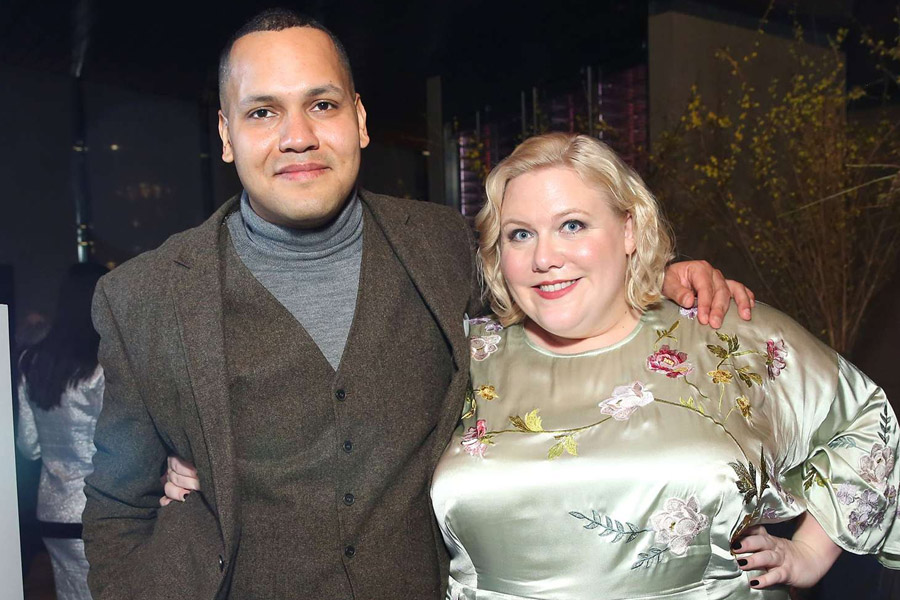
Lindy West is publicly identified as Ahamefule’s spouse. Their marriage is part of the modern chapter of Ahamefule’s life, and it also sits near the edges of the family story because it intersects with creative work. West has been involved in writing connected to the same emotional terrain, and their partnership is one of those rare cases where personal life and artistic life are closely braided together. The relationship is public, visible, and woven into the broader portrait of Ahamefule as a person who lives inside overlapping circles of art, family, and intimate collaboration.
Roya Amirsoleymani, partner
Roya Amirsoleymani appears in the public record as another partner in the relationship structure around Ahamefule and Lindy West. She is also connected to performance work as a producer. Her presence adds another layer to the family and relationship portrait. It shows that Ahamefule’s personal life does not fit into a single rigid box. It is more like a constellation, with each point illuminating the others. Public discussion of this relationship has helped frame Ahamefule as someone whose life and family structure are open, modern, and intentionally nontraditional.
Children
Ahamefule has publicly referenced children, including a daughter named Penelope and another child, Charley. Their children matter because they extend the family story into the next generation. The presence of children changes the emotional temperature of the whole narrative. Suddenly the story is not only about inheritance from the past. It is also about what gets passed forward. In that sense, the children are not just part of the family tree. They are its newest branches, still growing toward light.
Career as a Layered Performance
I see Ahamefule’s career as a long experiment in form. The music is there, but it never arrives alone. The trumpet sounds, but so does the laugh that follows a painful truth. The monologue begins, but it often becomes rhythm. This is what makes Now I’m Fine, Susan, Thin Skin, and The Things Around Us feel so distinctive. They are not standard memoir pieces. They are theatrical ecosystems.
Their early music work with Industrial Revelation established technical credibility, but the solo pieces gave Ahamefule a larger stage for emotional range. They became known for work that could hold comedy and sorrow in the same breath. That is a difficult balancing act. Many performers lean too hard into either the joke or the wound. Ahamefule does not. They let both live in the same room.
I also find the range of their achievements impressive because it crosses boundaries. They have earned fellowships, grants, awards, and recognition from arts institutions. They have worked in theater, recorded projects, and broader media. They have moved into television writing as well. That kind of career suggests durability, not just novelty. It suggests an artist who keeps finding new doors and then building hallways behind them.
What Makes the Work Resonate
Ahamefule J Oluo’s public story is strongest when it feels personal without being limiting. Content is personal, but emotions are broad. Although family history is specific, the ideas are universal. Absent father. A determined mom. Family members with different versions. A public marriage. Living creatively as children. These aren’t abstract. They underpin the story.
Perhaps that’s why the work travels. There’s muscle. Has rhythm. Honesty hurts, but comedy keeps you breathing. It polishes edges lightly. It retains some roughness, giving it life.
Timeline of Public Life
2011 brought a major early written expression of the family story.
2012 marked a key residency that pushed the performance work forward.
2014 and 2015 expanded the reach of the stage pieces and public visibility.
2016 helped establish the hybrid form of music and memoir on a larger national scale.
2019 centered the mother story.
2020 widened the family lens again.
2021 and 2022 kept the work active and adaptive.
2025 and 2026 showed that the artistic momentum is still moving.
FAQ
Who is Ahamefule J Oluo?
Ahamefule J Oluo is a Seattle based multidisciplinary artist known for blending music, comedy, writing, and theater into autobiographical performance work.
Why does family matter so much in Ahamefule J Oluo’s story?
Family is the emotional core of the public narrative. The mother, father, sibling, spouse, partner, and children all appear in the artistic work or public record, shaping both the content and the tone of the performances.
Who are the most publicly known family members?
The most publicly known family members are Ijeoma Oluo, Susan Jane Hawley, Samuel Lucky Onwuzip Oluo, Lindy West, Roya Amirsoleymani, and Ahamefule’s children.
What kind of work is Ahamefule J Oluo best known for?
They are best known for live performance pieces that combine trumpet, storytelling, humor, and memoir, especially Now I’m Fine, Susan, Thin Skin, and The Things Around Us.
What makes Ahamefule J Oluo different from other performers?
The difference lies in the mixture. The work feels like a chamber piece and a confession, a joke and a lament, a family album and a stage show. That blend gives it unusual emotional force.