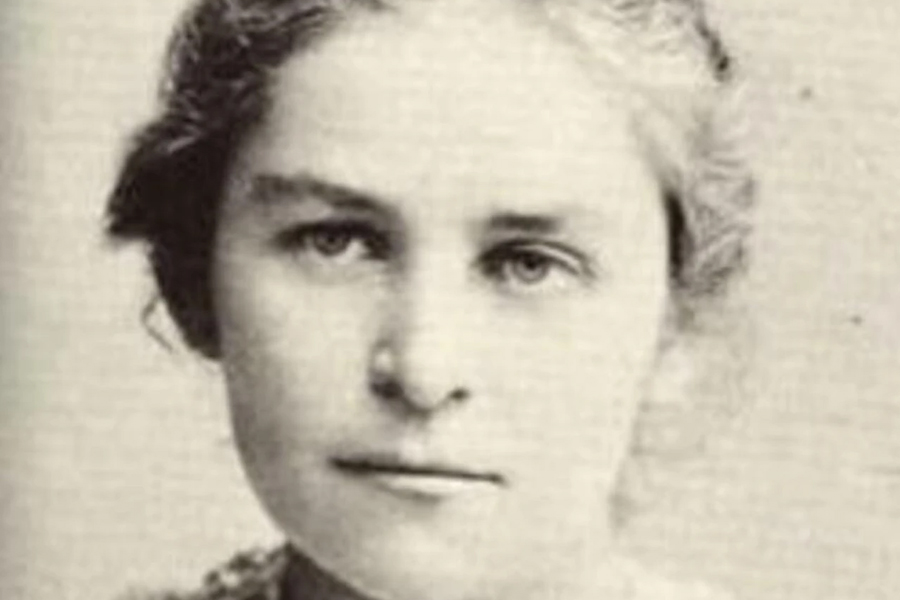
Who Hedwig Hensel Was
Hedwig Hensel is inextricably linked to the world she helped sustain. She was born in Neukirch, Saxony, on March 3, 1908, into a strict Catholic family that valued responsibility, order, and domesticity. History lured her into one of its darkest centers, despite her modest rural life.
Hedwig is best known as Auschwitz’s first commandant Rudolf Höss’ wife. Hedwig Höss or Hedwig Hoess are other spellings of her family name. After meeting Rudolf in the Artaman League, a nationalist agricultural movement that emphasized land, purity, and rural rejuvenation, she married him on August 17, 1929, at 21. An apparently normal marriage became a household surrounded by industrial murder.
Her life forces me to confront a difficult truth. Evil does not always arrive in a dramatic costume. Sometimes it arranges flowers, supervises children, tends a garden, and calls itself normal.
Early Life and Family Background
His family was pious, disciplined, and hierarchical, like ancient Germany. She was born to Ostwald Richard Hensel and Linna Florendine Kremtz. Her brother, Gerhard Fritz Hensel, was a painter. Family documents indicate a sibling, but her life is unknown.
His family formed Hedwig’s identity. Her parents valued home, motherhood, and obedience. Those qualities may have been normal elsewhere. In Nazi Germany, they joined a machine. Domesticity went beyond privacy. Political theater, a polished front porch facing a pit.
Hedwig joined völkisch circles in the 1920s. These movements romanticised peasant life, racial belonging, and national renewal. In that setting, she met Rudolf Höss. Their bond blossomed from shared admiration of family, land, and a greater cause, not just love.
Marriage to Rudolf Höss
Hedwig married Rudolf Höss August 17, 1929. After joining the SS, he oversaw mass murder in the Third Reich. Within the family, Hedwig depicted him as a loving spouse and parent. Their marriage is famous for this conflict between intimate warmth and public brutality.
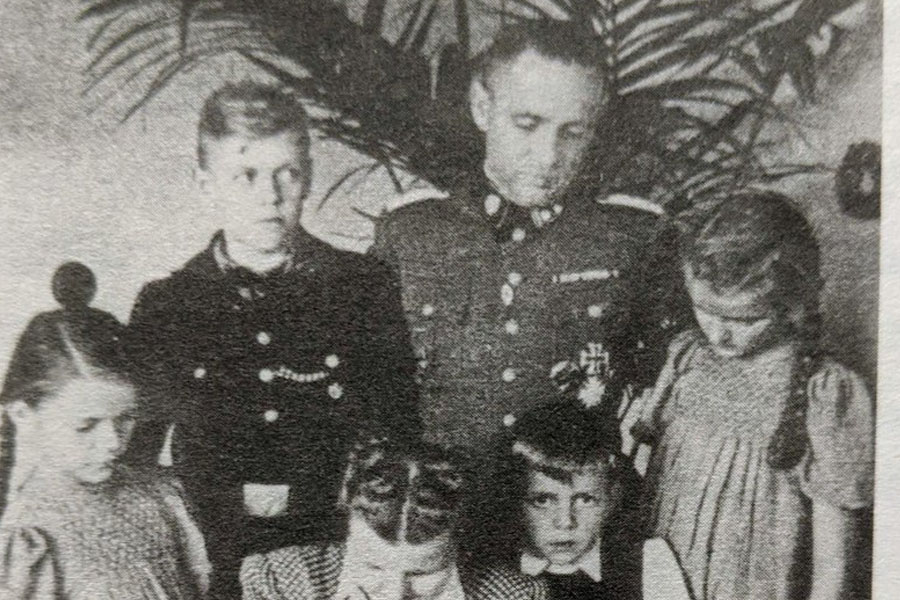
From 1930 until 1943, they had five children. The family moved with Rudolf as his SS career progressed. Hedwig accepted her part. She was a housewife and mother with no career. Her home work was not politically neutral. Nazis saw the home as an ideological factory. Children learned to belong to a family and a race.
As Rudolf’s rank grew, Hedwig’s status grew with it. She was not a bystander drifting at the edge of events. She was the mistress of a household tied directly to power.
The Auschwitz Villa and the Illusion of Paradise
Hedwig and her family resided in an Auschwitz-adjacent cottage from 1940 to 1945. This mansion is one of modern history’s most disturbing moral contradictions. Nearby captives were malnourished, abused, worked to death, and killed in gas chambers while the family enjoyed gardens, staff, animals, and luxuries.
I find the image almost unbearable in its calm. On one side, roses and children. On the other, smoke and ash.
Reports say Hedwig was proud of the property. She grew the garden and appreciated her husband’s promotion. Household goods and pleasures came from the camp’s thieving network. Villa looked like a dazzling window frame on a burning house.
Longstanding claims that she knew nothing about Auschwitz have been denied. The camp’s proximity, cremation stench, guards and prisoners’ continual activity, and family members’ claims make ignorance impossible to swallow. Evidence reveals a woman who learns to avoid looking at her surroundings.
Hedwig Hensel and Her Children
Hedwig was the center of a large family that outwardly embodied Nazi ideals. She and Rudolf had five children between 1930 and 1943. Their lives after the war reveal the long echo of the family name.
| Child | Birth Year | Notes |
|---|---|---|
| Klaus Höss | 1930 | Eldest son; later died in Australia in the 1980s, reportedly from alcohol-related causes |
| Heidetraut Höss | 1932 | Eldest daughter; later died before 2020, reportedly from cancer |
| Inge-Brigitt Höss | 1933 | Lived in Spain and later the Washington area in the United States; worked in fashion; spoke publicly about family life; died in October 2023 |
| Hans-Jürgen Höss | 1937 | Son; father of Rainer Höss |
| Annegret Höss | 1943 | Youngest daughter; born in November 1943 at Auschwitz |
Hedwig seemed watchful and bossy as a mother. She protected the children after the war and rarely spoke about it. Silence was passed on in many atrocity-torn families. The kids grew up with memories and omissions. Structure and privilege characterized the pre-1945 home. It split into hardship, displacement, and stigma after 1945.
Klaus Höss
Oldest child Klaus was born in 1930. He held the symbolic weight of first sons in ideologically conservative families. He died in Australia in the 1980s after a turbulent life. Reports link his death to drunkenness. His journey resembles the ruin left by notorious families.
Heidetraut Höss
Born in 1932, Heidetraut was the eldest daughter. Less is publicly known about her than about some of her siblings, but she remained part of the family web shaped by silence and burden. She died before 2020, reportedly from cancer.
Inge-Brigitt Höss
Inge-Brigitte, born in 1933, was one of the most famous children. After living in Spain, she worked in fashion in Washington, DC. Her family life interviews showed how much normality was created in the home. In her memories, the family house appears like a perfectly painted background, lovely yet terrible. In October 2023, she died.
Hans-Jürgen Höss
Hans-Jürgen, born 1937, was recognized through his son Rainer Höss. Rainer has publicly addressed his grandfather’s atrocities. Hans-Jürgen is part of a generational chain of remembrance, denial, and reckoning.
Annegret Höss
Annegret, the youngest child, was born in November 1943 at Auschwitz itself. That fact alone is chilling. Her birth took place inside a landscape where death had become routine. She entered the world in a family home standing beside one of history’s largest killing centers.
After the War
The collapse of Nazi Germany shattered the life Hedwig had known. In 1945, the family fled as the regime disintegrated. Rudolf was eventually captured, and Hedwig provided information that helped lead investigators to him. He was executed in 1947 at Auschwitz, the site of his own crimes.
Hedwig’s life altered drastically after his execution. The lady who lived comfortably near the camp was suddenly poor and shamed. She reared the kids in wartime Germany under tough conditions. She remarried and resided in Stuttgart. After working temporarily in a sugar plant, she relied on family and her subsequent marriage for security.
Despite poverty, she avoided postwar responsibility. She focused on Rudolf’s family life rather than his slaughter. To separate the individual from the crime was important to her memory management. This emotional bookkeeping aimed to straighten up the household ledger.
Later Years and Death
Hedwig visited her daughter Inge-Brigitt in Washington in subsequent decades. Though the fight was finished, moral wreckage lingered. Children and grandkids handled it differently. Some were private. Others, like Rainer Höss, publicly discussed descent.
While visiting her daughter in Washington, D.C., Hedwig died on September 15, 1989. She is interred in Fairfax County’s Idylwood. Her tombstone monument says “Mutti,” German meaning “Mommy.” An intriguing detail. It devalues a historically significant life. Again, tenderness and dread coexist.
The Family Legacy
I remember Hedwig’s biography and family structure well. Her parents, Ostwald Richard and Linna Florendine Hensel, shaped her early life. Her brother, Gerhard Fritz Hensel, is a different familial line. Rudolf Höss, her husband, brought that domestic framework to murderous ends. Their descendants acquired a tarnished reputation, not wealth or dignity.
Grandchildren added more. Hans-Jürgen’s son Rainer Höss was one of the most outspoken descendants to address the family past. His public attitude contrasts hereditary identity and moral choice. So, the Höss line depicts how family memory may harden into denial or open into witness.
Because she was average, Hedwig remains disturbing. She was a mother, wife, beneficiary, and housewife. Her story shows me that horror depends on planners, killers, and those who embrace and homeize it.
FAQ
Who was Hedwig Hensel?
Hedwig Hensel was a German woman born on March 3, 1908, in Saxony. She is best known as the wife of Rudolf Höss, the first commandant of Auschwitz. She lived with her family in a villa beside the camp during the years of its operation.
When did Hedwig Hensel marry Rudolf Höss?
She married Rudolf Höss on August 17, 1929. She was 21 years old at the time.
How many children did Hedwig Hensel have?
Hedwig and Rudolf Höss had five children between 1930 and 1943: Klaus, Heidetraut, Inge-Brigitt, Hans-Jürgen, and Annegret.
Did Hedwig Hensel know what was happening at Auschwitz?
She later claimed limited knowledge, but that claim is widely doubted. The family’s home stood next to Auschwitz, and the physical signs of mass killing would have been difficult to miss. Her life of comfort was deeply tied to the camp system.
What happened to Hedwig Hensel after World War II?
After 1945, she fled with her family, lived through hardship in Germany, and raised her children after Rudolf’s arrest and execution in 1947. She later remarried, lived in the Stuttgart area, and spent time visiting family in the United States.
Where did Hedwig Hensel die?
She died on September 15, 1989, in Washington, D.C., while visiting her daughter. She was buried in Idylwood, Fairfax County, Virginia.
Who was Rainer Höss?
Rainer Höss was Hedwig’s grandson through her son Hans-Jürgen Höss. He became publicly known for speaking about the legacy of his family and confronting the crimes connected to his grandfather’s name.
Why is Hedwig Hensel discussed so often today?
Interest in her life has grown because she represents the domestic face of Nazi power. Her life beside Auschwitz shows how privilege, family routine, and mass murder could exist side by side. That contrast continues to disturb people because it reveals how horror can hide behind ordinary walls.